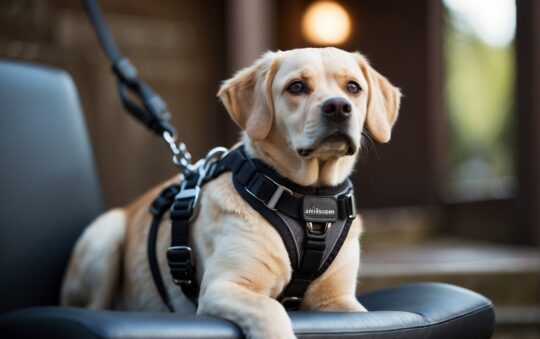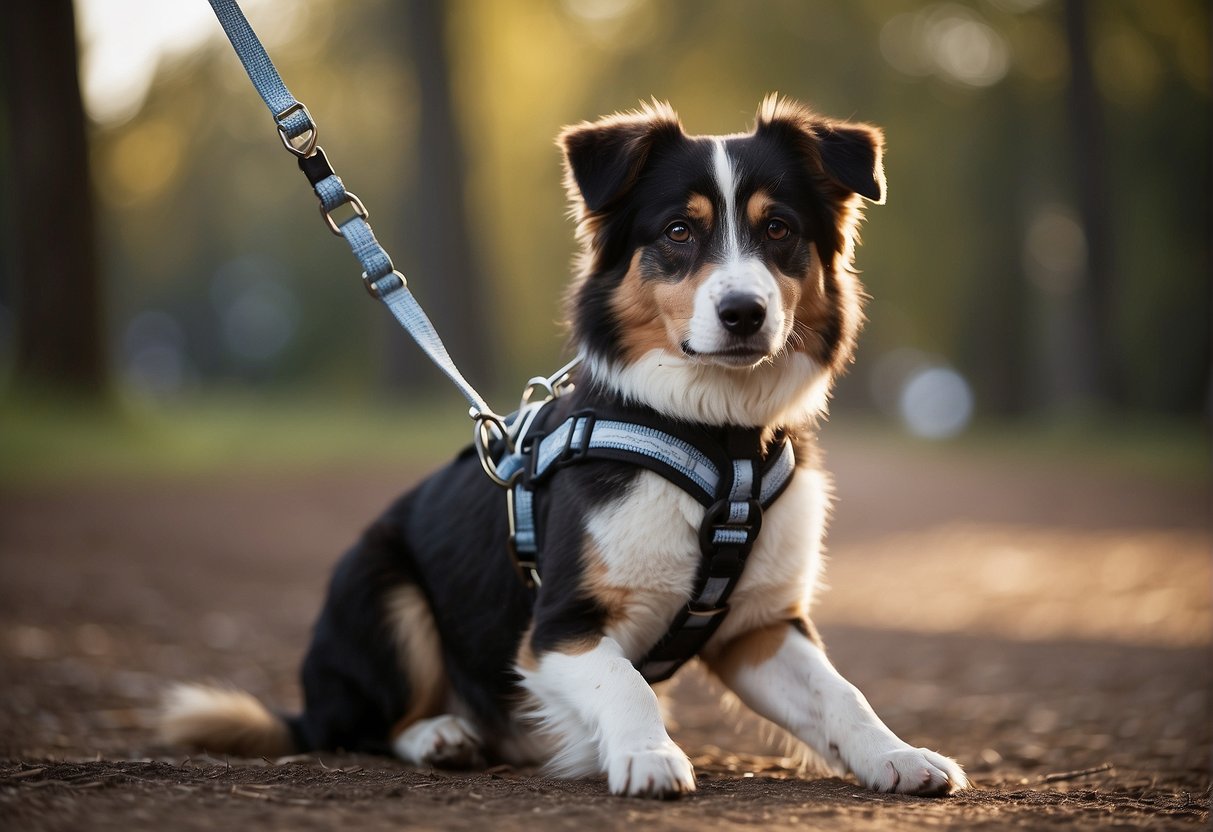
Securing a dog harness correctly is essential for your pet’s comfort and safety.
Dog harnesses come in various types, such as step-in, overhead, front-clip, back-clip, vest, and no-pull designs. Each style serves different purposes and suits different dog shapes and behaviors.
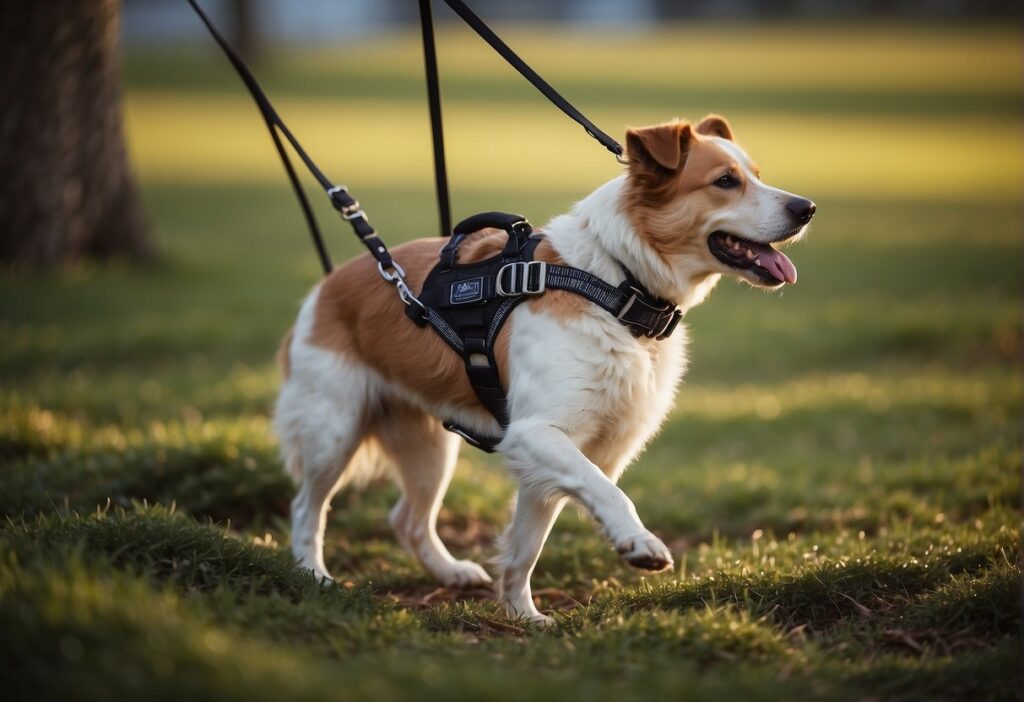
Putting on a step-in harness requires you to lay it on the ground for your dog to step into. Meanwhile, an overhead harness is slipped over your dog’s head and adjusted around the body.
Proper fitting is crucial, ensuring the harness is snug but not restrictive, allowing two fingers to fit between the harness and your dog’s skin.
Knowing the differences, such as a no-pull harness which often has a front-clip to deter pulling, or a back-clip harness for calm dogs, helps in choosing the right harness.
Always follow the manufacturer’s instructions for securing the harness to ensure maximum effectiveness and safety.
Selecting the Right Harness
Understanding Different Types
Dog harnesses vary significantly in style and function. Some are designed for training, while others prioritize comfort.
Select a type based on your dog’s routine and activity level.
No-pull harnesses work well for dogs that tend to tug on the leash, distributing pressure evenly across the body. Alternatively, step-in harnesses are ideal for calm dogs and provide easy wearability.
Comfort is crucial in any harness selection. Look for features like adjustable straps and padded sections to ensure your dog doesn’t experience chafing or discomfort during use.
Reflect on whether a harness with a front clip, back clip, or a multi-clip option is most suitable for your pet’s walking style and demeanor.
Measuring Your Dog for a Perfect Fit
Accurate measurement is the foundation of a well-fitting harness.
Use a soft tape measure to find the girth of your dog’s rib cage, which is the most important measurement for harness sizing. Ensure the tape measure is snug, yet not tight, around the widest part just behind the front legs.
The table below details the steps for measurement:
| Step | Area to Measure | Notes |
|---|---|---|
| 1 | Girth of Rib Cage | Measure just behind the front legs at the broadest point. |
| 2 | Lower Neck Circumference | For certain harness designs, especially those with neck straps. |
| 3 | Length of Back | From neck to base of the tail, for full-body harnesses. |
After obtaining these measurements, check the harness’s sizing chart to find the correct fit. Ensure that the harness allows for two fingers to fit between the straps and your dog’s body for adequate comfort.
Considering Your Dog’s Needs
Assess your dog’s specific requirements, such as age, health, and size.
Harnesses for senior dogs or those with health issues should provide extra support and minimize pressure on the neck. For larger dogs, robust materials and secure clasps are a must for safety and control.
Pay attention to the harness material. Breathable fabrics contribute to overall comfort, especially for dogs with longer fur or those living in warm climates.
If your dog enjoys swimming or adventures in nature, seek out quick-drying and washable materials.
Finding the right dog harness ensures your pet’s comfort and safety.
Preparing to Harness Your Dog
Before you introduce your dog to their harness, it’s vital to create a calm and trusting environment. Your furry friend’s temperament can greatly influence their reception to new experiences.
Calming Your Dog Before Dressing
To ensure a positive experience, start by helping your dog associate the harness with tranquility and comfort.
Speak in a calm, reassuring tone and allow them to sniff the harness as you gently place it beside them. Offering their favorite treats helps establish trust and relaxation.
It’s beneficial to engage in a soothing activity before dressing. A short play session or a belly rub can reinforce the sense of security and familiarity.
Always reward your dog with praise and treats to maintain a serene atmosphere.
Familiarizing Your Dog with the Harness
Introducing the harness should be a gradual process.
Let your dog sniff and inspect the harness. Gently touch them with the harness to orient them to its texture and feel, pairing it with verbal praise and treats.
Once your dog seems curious or indifferent to the harness, you can carefully begin to place it over their head or around their body, depending on the harness style.
Be patient and give plenty of praise as your dog grows accustomed to the sensation of the harness.
Putting on the Harness
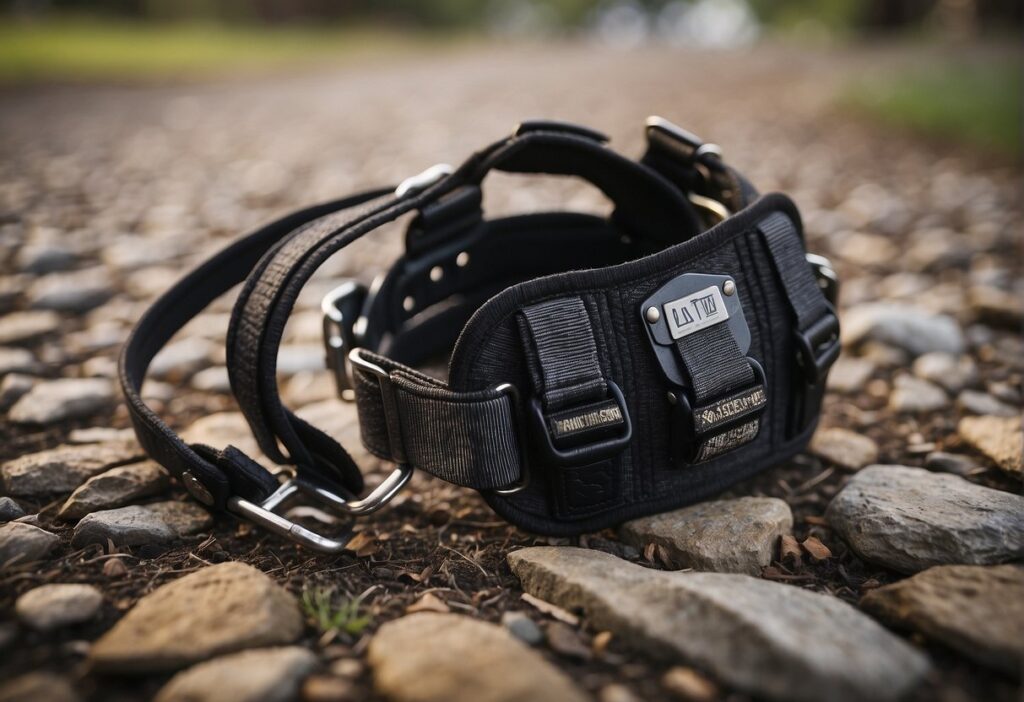
Properly fitting a harness on your dog ensures safety and comfort. The size and style of the harness dictate the method required for secure attachment.
Step-in Harness Technique
Place the harness flat on the ground, and direct your dog to step into the loops formed by the harness.
Gently pull the harness up and over the dog’s back. Once you have their front paws through the loops, buckle the harness on the back, ensuring it’s snug but not too tight. Check that you can fit two fingers under any strap.
Over-the-Head Harness Method
Begin by sliding the harness over your dog’s head, ensuring the D-ring is on your dog’s back.
Guide your dog’s front legs through the openings and lift the belly strap to fasten it to the back. Adjust the side straps to minimize pressure on the neck while keeping the harness snug.
Front-Clip and Back-Clip Harnesses
Front-clip harnesses reduce pulling by redirecting your dog’s attention, while back-clip harnesses are ideal for well-trained dogs.
For both types, ensure the chest strap and belly strap comfortably fit around your dog, securely fasten the clips, and check the fit to avoid any restriction or escape.
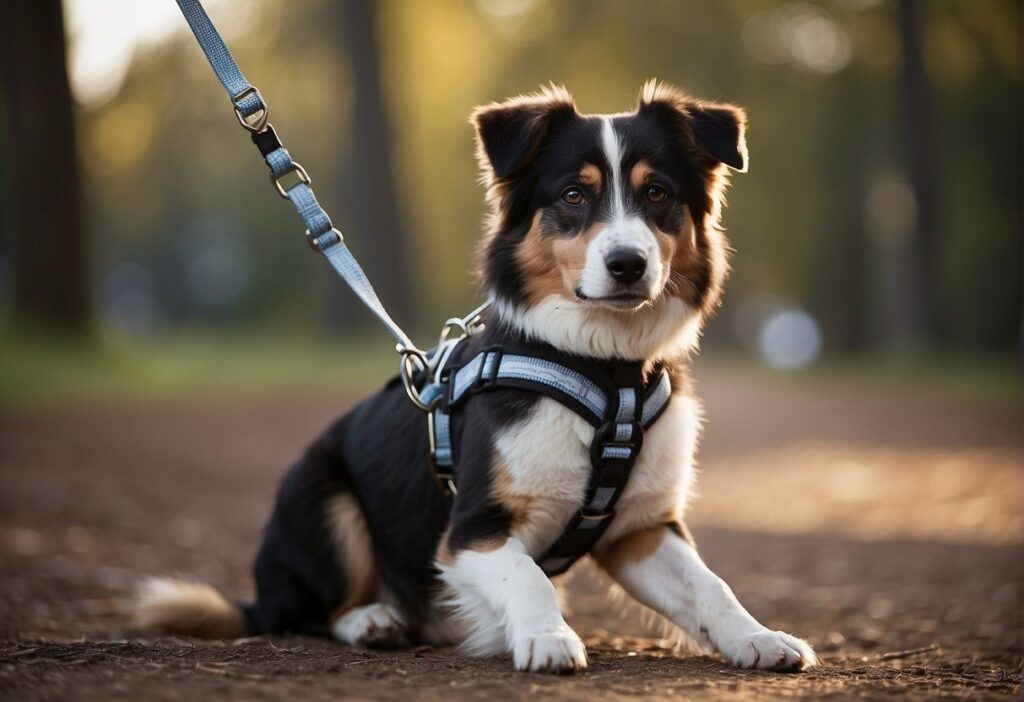
Adjust the straps for a balanced fit that distributes pressure evenly across the chest and shoulders.
Adjusting and Securing the Harness
Before you proceed, ensure that the harness is the correct size for your dog and that all the straps are in place.
Checking for Proper Fit and Comfort
Start by placing the harness on your dog, making sure it’s not too tight or too loose.
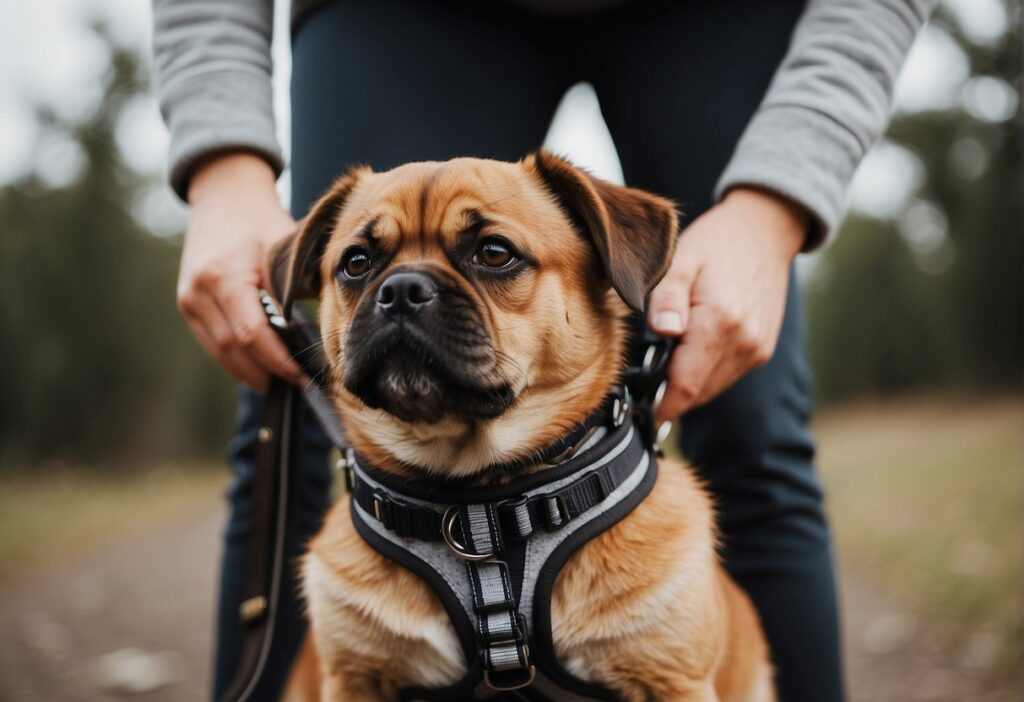
You should be able to slip two fingers between the harness and your dog’s skin. If the harness presses against your dog’s skin or if you can fit more than two fingers, adjust accordingly.
The harness should sit comfortably above your dog’s ribs without restricting breathing.
Next, observe your pet’s body language.
A comfortable dog will move freely without discomfort. Look out for signs of chafing or irritation, especially if your dog has a short coat. Any redness or persistent scratching indicates a poor fit, necessitating further adjustments.
Final Adjustments for Safety
Check the positioning of the D-ring or leash clip. It should be on the back of the harness, away from the neck to discourage pulling and protect the throat.
Ensure that all clips are secure and that pulling on the leash doesn’t shift the harness significantly.
Make sure the straps do not inhibit your dog’s movement or cause discomfort.
Properly secured, the harness should prevent escape, promote safety, and discourage pulling without causing discomfort.
| Criteria | Status | Notes |
|---|---|---|
| Two-finger rule | Achieved/Needs Adjustment | Ensure gentle fit; adjust as necessary |
| D-ring placement | Correct/Incorrect | Should be positioned on the back |
| Clip security | Secured/Unsecured | Verify all clips are firmly in place |
| Comfort | Comfortable/Needs Refinement | Watch for signs of chafing or distress |
| Movement | Uninhibited/Restricted | Harness should allow natural movement |
Frequently Asked Questions
Navigating the nuances of dog harnesses is crucial for both the comfort of your pet and the effectiveness of the harness. Below are detailed answers to common queries regarding various types of harnesses and their proper use.
What are the steps to putting on a standard dog harness?
Begin by ensuring the harness is unbuckled and laid flat. Slide your dog’s head through the neckpiece. Then, lift each paw through the loops. Finally, fasten the buckles snugly. Make sure you can still fit two fingers under any strap.
Can you guide for fitting a small dog with a harness?
For smaller dogs, select a harness that offers adjustability to cater to their petite frame. Afterward, adjust the straps to a snug fit. This will prevent them from slipping out, but still be comfortable enough not to restrict movement.
What is the correct way to use an Easy Walk harness on a dog?
An Easy Walk harness helps discourage pulling by directing the dog’s body towards you. Make sure the chest strap sits low across the breastbone. Then, clip the leash onto the ring at the front strap to steer gently.
How do you properly position a harness on a dog’s body?
The harness should sit above the shoulders without restricting neck movements. The chest strap must allow free leg motion. Meanwhile, the belly strap should be behind the rib cage, not touching the elbows.
What instructions are available for securing a Vibrant Life harness on a dog?
The Vibrant Life harness often comes with a step-in design. Begin by placing your dog’s front feet in the openings. Then, pull the harness up and over the back, clipping it securely. Lastly, check for tightness and comfort.
Are there specific methods for different types of dog harnesses?
Yes, harnesses vary from step-in styles to overhead harnesses. Each has a unique fitting method.
Always follow the manufacturer’s guidelines for specific adjusting points and securing mechanisms.