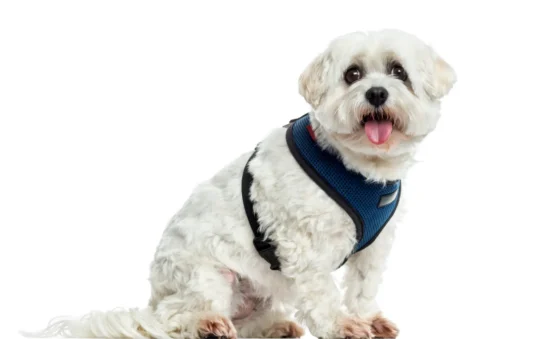
Ensuring a proper fit for your dog’s harness is essential to their comfort and safety.
A well-fitted harness can prevent escape and injury while evenly distributing pressure across your dog’s body. It should be snug enough that you can slide only two fingers under any strap.

To begin fitting a harness, start with the neck strap, followed by the chest and girth straps.
Adjust the harness so it does not rub or chafe by allowing enough room for movement without being too loose. The harness should not constrict your dog’s movement or breathing, nor should it be so loose that they can wriggle free.
Checking the fit of your dog’s harness regularly is important as their size can change due to growth, weight loss, or weight gain.
A properly fitting harness provides control for the owner and ensures the dog’s well-being during walks, training, or adventures. Make sure the harness does not pinch their skin or fur, and that it sits above the shoulder blades to allow for full range of motion.
Assessing the Right Harness for Your Dog
To ensure your dog’s comfort and safety during walks, choosing the right harness is crucial. It involves understanding harness types, proper measurements, and the right features.
Understanding Different Types of Harnesses
Harnesses come in various designs, each offering different benefits.
The step-in harness is ideal for dogs that dislike overhead movements, while a front-clip harness can help discourage pulling by redirecting your dog.
Back-clip harnesses are suited for calm dogs, and dual-clip harnesses offer versatility for training and walking.
Measuring Your Dog for a Harness
Accurate measurements are the foundation of a well-fitting harness. Measure your dog’s neck and girth—the area behind the front legs and around the body.
Ensure the tape is snug but not tight to allow for comfort, considering any fur that might affect the fit.
Selecting the Correct Size and Adjustability
Once you have your dog’s measurements, select a harness that lists those numbers within its size range.
Adjustable straps are essential for a secure yet comfortable fit, allowing room for growth or weight changes. A proper fit should allow two fingers to slide under the harness.
Choosing Harness Material and Features
The right material and features enhance comfort and functionality.
Look for durable fabric that can withstand wear and washing. Features like buckles, clips, and D-rings for leash attachment should be easy to use and provide secure connection points.
Health and Behavior Considerations
A well-fitting harness should not cause discomfort, irritation, or restrict movement.
Dogs with health concerns, like those recovering from surgery or brachycephalic breeds, might require special harness solutions. Consult a veterinarian or trainer for recommendations tailored to your dog’s needs.
Advantages of a Properly Fitted Harness
A harness that fits well affords better control during walks while ensuring safety and comfort for your dog. It minimizes the risk of injury, allows for normal breathing, and won’t cause chafing or rubbing. This results in a more pleasurable walking experience for both you and your canine companion.
Fitting Your Dog’s Harness
A proper harness fit is crucial for your dog’s comfort and safety during walks. The fit should be snug without being tight, allowing room for movement without any risk of escaping.
The Initial Fit
When fitting your dog’s harness for the first time, start by unbuckling all straps and laying the harness flat on the ground.
Place the harness on your dog, ensuring the correct piece goes over the neck and that straps will wrap around the chest. The chest piece should sit just above the breastbone.
Adjusting the Straps
Adjust the straps by pulling them through the buckles until you achieve a snug fit. You should be able to fit two fingers under any strap. Ensure the belly strap is secure but not causing discomfort around the girth.
Checking the Fit
After the initial adjustment, have your dog walk around to observe the harness’s behavior. The harness should stay in place without shifting.
Pay special attention to the leg holes and the neck area to verify they don’t restrict movement or cause chafing.
Safety Precautions and Fitting Tips
Always check the harness for any signs of wear or damage before each use.
Prevent injury by ensuring a good fit to avoid pressure on the neck and the potential for rubbing or chafing under the legs and around the chest. Consider harnesses with padded straps for additional comfort.
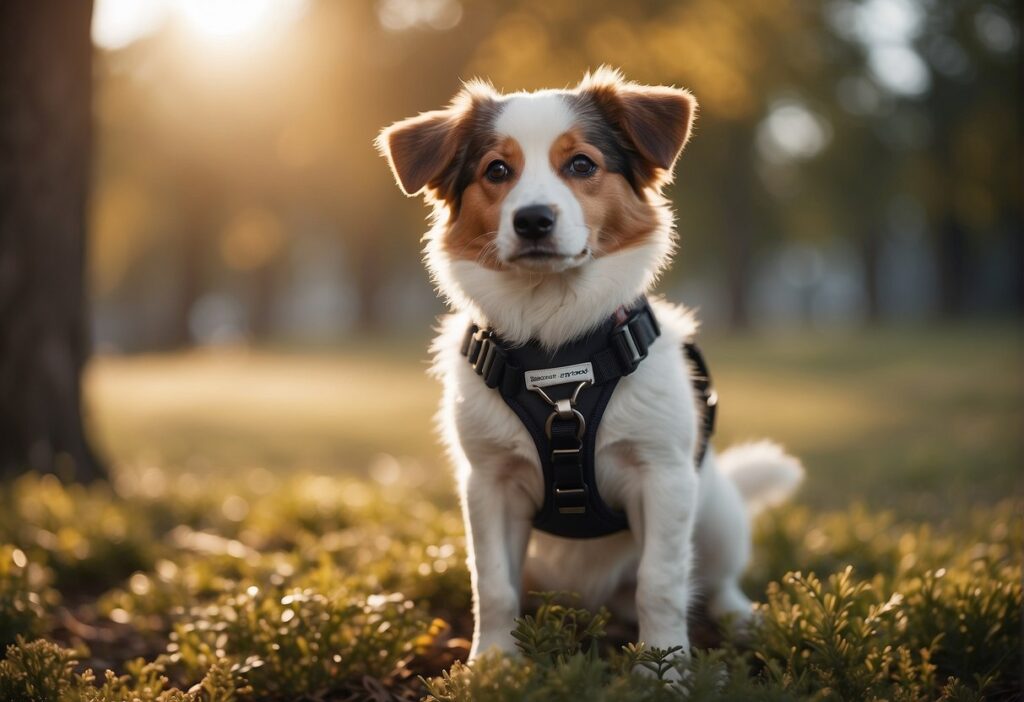
Training and Walking
When selecting a dog harness for training and walking, achieving the right fit is key. A well-fitted harness can positively influence your dog’s walking and training behavior.
For example, studies indicate that harnesses can impact the stress levels in dogs.
Correct Fit:
- Ensure no rubbing or chafing occurs, as this indicates a poor fit.
- With the harness on, you should be able to fit two fingers under the straps.
- Adjust the fit to avoid restricting movement, which could alter stride length.
Harness Type:
- Select a harness that doesn’t restrict shoulder movement.
- Harnesses differ; some may be more suitable for specific activities or breeds.
- Consider non-restrictive designs that permit shoulder extension, crucial for a dog’s natural gait.
To fit a harness properly, start by measuring your dog’s girth. Adjust it for a snug yet comfortable fit, with the ability to lay flat without twisting.
A harness that’s too tight can cause discomfort or even injury. Meanwhile, a loose harness could allow your dog to slip out or may hinder their natural movement, possibly affecting their biomechanics.
Harness Adjustment Table:
| Harness Part | Proper Fit Criteria |
|---|---|
| Neck Opening | Should not press on the throat |
| Chest Strap | Sits just above the sternum |
| Girth Strap | Allows for two fingers beneath |

Harness Maintenance and Care
Proper maintenance ensures the longevity of your dog’s harness and maintains safety standards during use.
Cleaning and Inspection Routines
Your dog’s harness requires regular cleaning to prevent dirt and odor buildup.
Start by removing any debris lodged in the fabric. Use a mild detergent and lukewarm water to hand wash the harness, paying attention to the buckle and clip areas which can collect grime.
After washing, air dry the harness away from direct sunlight to avoid damage.
Conduct a monthly inspection to identify wear and tear.
Check the fabric, buckles, D-rings, and straps for signs of fraying or weakness. Pay special attention to the clip areas as they endure a lot of movement and stress.
Any loose straps should be adjusted to maintain the proper fit and security.
Replacing a Worn or Damaged Harness
When the harness shows significant wear, replacement is critical for your dog’s safety.
Visible damage to the fabric or straps and malfunctioning buckles or clips are indicators that it’s time for a new harness.
Ensure that all D-rings and clips function smoothly and securely without resistance or gaps.
A new harness should fit snugly without causing friction or restricting movement.
Check the fit and adjust the straps to allow two fingers to slide easily under any part of the harness. A well-fitting harness should distribute pressure safely across your dog’s body without the risk of slipping or choking.
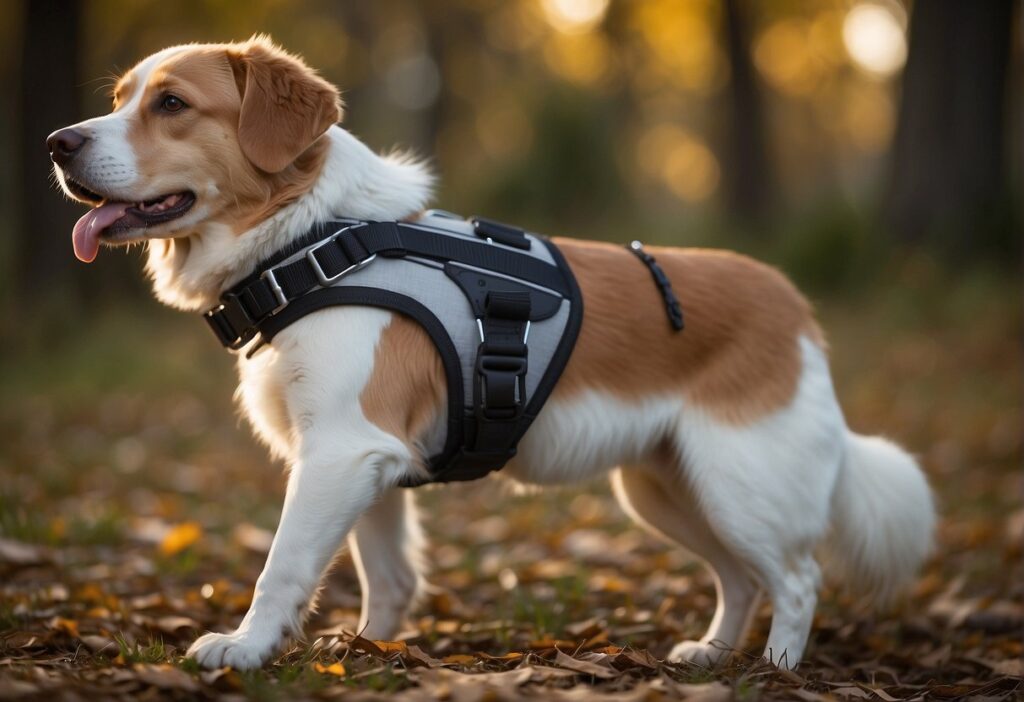
Frequently Asked Questions
In fitting a dog harness correctly, specific measurements and adjustments are crucial to ensure comfort and security for your pet.
What is the proper way to measure a dog for a harness to ensure a correct fit?
First, measure your dog’s neck, where the collar sits, and the widest part of the chest, behind the front legs. Use a flexible tape measure and add 2 inches to each measurement for comfort.
Can a harness be too tight or too loose for a dog, and how to tell?
You’ll know a harness is too tight if you can’t fit two fingers between the harness and your dog’s body. Conversely, it’s too loose if it rotates easily around your dog’s body or if they can wriggle out.
What are the signs that a dog harness is well-fitted for senior dogs?
A well-fitted harness for senior dogs should not restrict movement, especially around the shoulders. It should also be easy to put on and take off, considering their potential reduced mobility.
How should a no-pull dog harness fit to prevent discomfort during walks?
A no-pull harness should sit above the sternum and below the neck. It should also not cause rubbing or chaffing. Check for a secure fit that allows for a full range of motion.
What adjustments are needed for a padded chest harness to fit a small dog appropriately?
On a padded chest harness for a small dog, ensure the chest padding does not extend beyond the shoulder area. Also, make sure that the straps do not hinder leg movement or cause chafing.
Where should the buckles and straps align when fitting a dog harness?
Buckles and straps should fasten without pinching the skin or fur. Straps should run parallel to the body. Buckles should sit flush against the harness without pressing into the dog’s body.