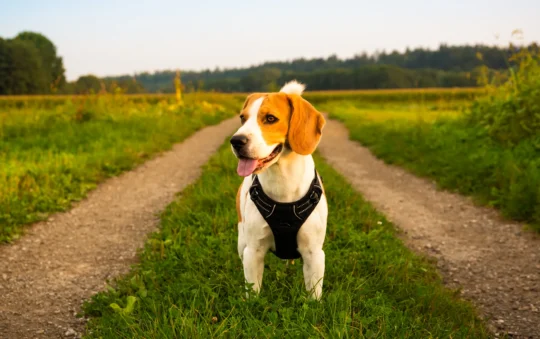
Choosing between a dog harness and a collar is an important decision for pet owners. The right option depends on your dog’s size, breed, and behavior. Each tool offers different benefits and considerations to ensure your dog’s safety and comfort.
Studies have shown that harnesses can provide more control with less risk of physical harm to your dog. A study on the behavioral effects of harness versus collar use suggests that both can be used without significant stress indicators. Moreover, another study points out that a harness may reduce pressure on the neck, making it a safer option for dogs prone to respiratory issues or eye pressure problems.
Collars, on the other hand, are traditional and may be suitable for dogs that don’t pull or have respiratory issues. For example, a basic collar may be sufficient for well-trained dogs that walk calmly. However, a study on leash pulling indicates that a chest harness can be more beneficial for dogs that tend to pull, offering better control and potentially reducing the risk of neck strain for the dog.
Understanding the Basics
Choosing the right gear for your dog, whether a harness or collar, is crucial for both their safety and comfort. The right choice will depend on the fit, your dog’s breed, and their health needs, such as chest pressure and trachea support.
Types of Dog Harnesses
Harnesses distribute pressure across your dog’s body, reducing strain on their neck. Step-in harnesses are ideal for calm breeds and slip over the dog’s legs. The back-clip harness, which has a leash attachment on the back, is good for small breeds prone to tracheal collapse. Table for illustration:
| Harness Type | Best for | Considerations |
|---|---|---|
| Step-in Harness | Calm breeds, quick dressing | Less control for pullers |
| Back-clip Harness | Small breeds, trachea protection | May encourage pulling in some dogs |
Another popular type is the front-clip harness, which offers more control over the direction your dog moves, making it a good choice for training purposes.
Types of Dog Collars
Collars are a traditional choice for many dog owners. The flat collar is the most common type, suitable for dogs that don’t pull and for hanging ID tags. The martingale collar is designed for breeds with narrow heads, like Greyhounds, to prevent them from slipping out. For dogs with health concerns, a padded collar can provide extra comfort without putting extra pressure on the trachea.
| Collar Type | Best for | Considerations |
|---|---|---|
| Flat Collar | Non-pullers, ID tags | Constant neck pressure for pullers |
| Martingale Collar | Narrow-headed breeds | Must fit correctly to be effective |
| Padded Collar | Additional comfort, health issues | Bulkier, might not suit all breeds |
Choosing the Right Equipment
Selecting the right equipment for your dog can significantly enhance their safety, comfort, and training experience. Let’s explore the specifics of harnesses and collars to find the best match for your furry friend.
Harnesses for Specific Needs
When you’re picking a harness for your dog, consider their individual needs. For puppies or small dogs that are still leash training, a no-pull harness with a front-clip can prevent pulling and offer more control. This is especially true for breeds prone to escaping, like whippets. On the other hand, a back-clip harness could be more comfortable for dogs like pugs and French bulldogs with brachycephalic faces, ensuring a fit that doesn’t restrict breathing. A well-fitting harness can offer better security and distribute leash pressure across a larger body area, which is a durable solution that often proves to be safer and more comfortable.
- No-pull Harness: Ideal for leash training and control
- Front-clip Harness: Good for training; redirects pulling
- Back-clip Harness: Offers comfort for easy walkers
- Step-in Harness: Convenient for skittish dogs
Collars for Everyday Use
Collars are the standard go-to for most dog owners. A flat collar is sufficient for dogs that don’t pull and is an easy way to carry ID tags and licenses for identification. For escape artists or breeds like greyhounds and whippets, a martingale collar offers added security without choking your dog. These collars must fit well, preventing the dog from slipping out while ensuring comfort. Always check that you can fit two fingers between the collar and your dog’s neck for a proper fit.
Training and Behavior
Choosing the right tools and methods can significantly impact your dog’s behavior and the effectiveness of training. Your approach should balance control with comfort, minimizing stress for both you and your dog.
Leash and Harness Training
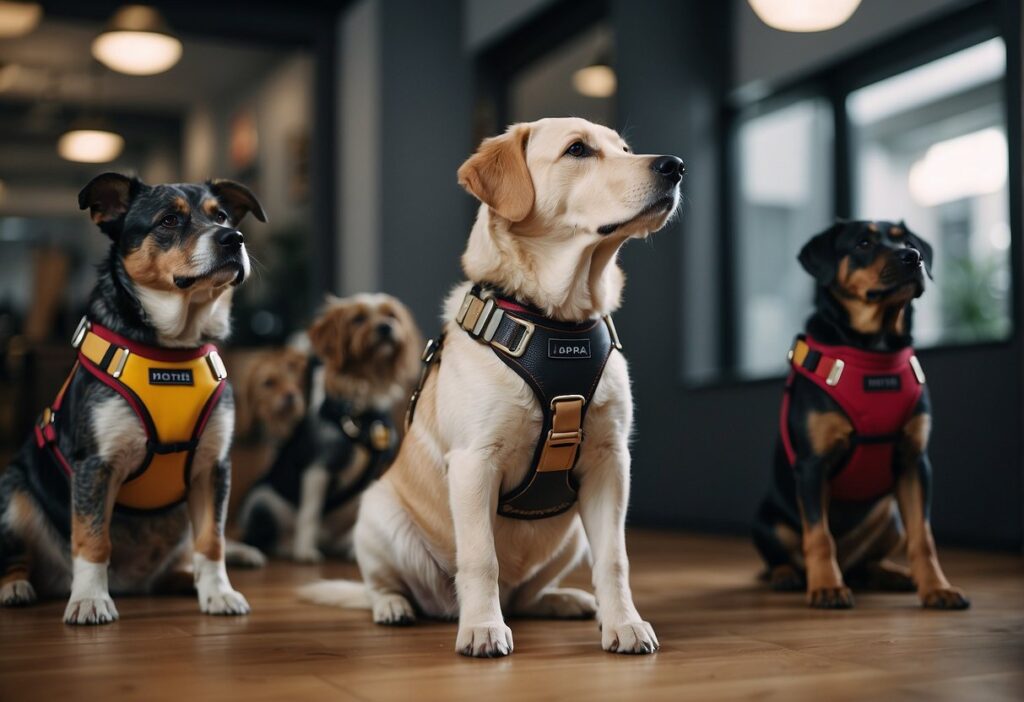
Harnesses distribute pressure across a larger area of your dog’s body. For dogs that pull, a Ruffwear Front Range Harness features leash attachments on the back and chest, offering better control without discomfort or chafing. Begin with basic commands like ‘sit’ and ‘stay’, ensuring that leash tension doesn’t cause distress.
When introducing your dog to a harness, associate it with positive experiences. Use treats and praise to reward your dog for wearing the harness without pulling. Training with consistent, gentle guidance helps your dog understand what’s expected while walking on a leash.
Pros and Cons of Harness and Leash Training
| Pros | Cons |
|---|---|
| Better control for pulling dogs | Can be more complex to put on compared to collars |
| Minimizes neck strain, distributing pressure to shoulders and torso | Improper fit can lead to escape or chafing |
| Offers attachment options for different training stages | Some dogs may require time to adapt to a harness |
Positive Reinforcement
Positive reinforcement strengthens good behavior through rewards. Treats, praise, or toys can motivate your dog to follow commands like ‘sit’ and ‘stay’. It’s a method that encourages your dog to repeat desired actions, enforcing a positive training experience without the need for force or negative consequences.
Implementing positive reinforcement requires patience and consistency. Your dog will learn to associate good behavior with rewards, establishing a trusting relationship. Reinforce commands with treats or praise immediately, to link the action with the reward.
Health and Comfort Considerations
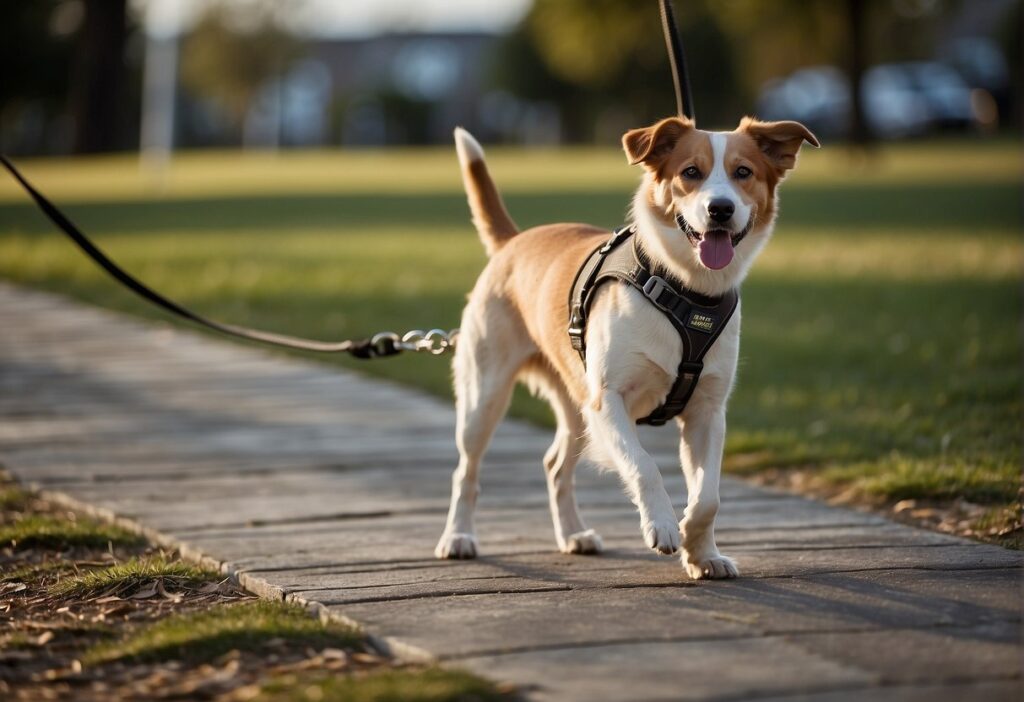
Choosing between a dog collar and a harness requires careful consideration of health and comfort for your furry friend. The right choice can prevent injuries and ensure your dog’s well-being during walks and activities.
Avoiding Injuries and Discomfort
When you’re walking your dog, the risk of neck strain or injury is significant, especially if they tend to pull.
A collar places pressure directly on the neck, which can lead to tracheal collapse in toy breeds or contribute to respiratory problems in dogs like French Bulldogs.
To avoid these issues, a harness that distributes pressure away from the trachea and neck can be a safer alternative.
For dogs with a history of back pain, a dual-clip harness or a Blue-9 Balance Harness can help manage the momentum of pulling and reduce the discomfort.
Ensure that the harness of choice is breathable and padded for comfort, especially in hot weather to avoid overheating.
| Issue Considered | Collar Concerns | Harness Benefits |
|---|---|---|
| Tracheal Pressure | High risk for tracheal collapse | Reduces pressure on trachea |
| Back Discomfort | Can increase back pain with pulling | Reduces strain and distributes force |
| Breathability | Not applicable | Look for breathable materials |
| Choking Hazard | Increased risk for dogs that pull | Decreased choking hazard |
Special Considerations for Certain Breeds
Not all dogs are suited for a standard collar or harness.
For example, French Bulldogs and other brachycephalic breeds often encounter respiratory problems; a harness is crucial to mitigate further strain on their breathing.
Additionally, dogs nervous about having gear slipped over their heads can benefit from step-in harness designs, which are less intimidating and easier to put on.
For small or toy breeds with delicate cervical vertebrae, such as Chihuahuas, a properly fitted harness is imperative to avoid injuries from sudden movements or excessive pressure.
Remember, a harness should be snug enough to prevent your dog from slipping out but not so tight as to cause discomfort.
Frequently Asked Questions
When selecting between a harness and a collar for your dog, it’s vital to weigh their individual benefits and usage situations. This section is designed to clarify common inquiries you might have.
What are the pros and cons of using a dog harness compared to a collar?
A harness distributes pressure more evenly across your dog’s body, potentially reducing neck strain and offering better control for you.
However, some dogs may find harnesses more restrictive and they can be a bit harder to put on, especially for a wriggly dog.
On the other hand, collars are typically easier to slip on and are ideal for attaching ID tags, but they can cause neck strain and choking if your dog pulls hard.
How should one choose between a harness and a collar for small dogs?
In small dogs, a harness may be preferable as it’s less likely to cause injury due to their delicate necks.
Harnesses can offer more control without the associated risk of neck strain. Before choosing, consider your small dog’s temperament, activity level, and any respiratory issues.
What type of restraint is recommended by veterinarians for dogs?
Veterinarians often recommend a restraint that suits your dog’s size, behavior, and health needs.
A harness is generally recommended for dogs prone to tracheal collapse or with respiratory issues. It’s best to consult your vet for tailored advice.
Are harnesses or collars more suitable for dogs that tend to pull?
For dogs that pull, a harness may be more suitable, as it can mitigate pulling behavior while protecting the dog’s throat from injury.
Some harnesses are specifically designed to discourage pulling, helping improve your walks.
Can a dog’s behavior improve by using a harness instead of a collar?
Behavioral improvements can be seen in some dogs when switching to a harness, as it can reduce pulling and prevent related neck injuries.
A harness may induce less stress and contribute to a more cooperative demeanor during walks.
What concerns might dog trainers have regarding the use of harnesses?
Dog trainers might note that harnesses can enable pulling in some dogs if not used correctly. They may also assert that for certain training objectives, a collar could offer better communication through gentle correction.
However, trainers typically prioritize the dog’s comfort and safety above all.