

Deciding whether to leave a dog harness on your pet constantly is a common concern for many dog owners. A harness can offer more control during walks and is often seen as a comfort and safety measure. However, it is imperative to evaluate the harness type and your dog’s specific needs before making this a routine practice.
Generally, a harness should not be worn by dogs all the time. Continuous wear can lead to skin issues like irritation and matting of fur. Your dog’s comfort and the potential for injury are key considerations, as constant pressure from a harness can be harmful over time.
For your dog’s well-being, it’s best to remove the harness after use. Ensuring that your dog has time without a harness allows their skin to breathe and prevents discomfort. Think of a harness as a tool rather than a garment; it serves a purpose during specific activities but isn’t designed for constant wear.
Understanding Harnesses for Dogs
When considering a harness for your dog, it’s essential to evaluate the type, fit, and design to ensure your pet’s comfort and safety.
Types of Harnesses
Harnesses for dogs come in various styles, each serving different needs.
A step-in harness is ideal for dogs that dislike having harnesses put over their heads. On the other hand, back-clip harnesses attach at the top and are suitable for well-trained dogs, while no-pull harnesses often have a front clip that helps deter pulling by redirecting your dog’s movement. For versatile control, a dual-clip harness has both front and back attachments. Padded harnesses offer extra comfort, especially for dogs with sensitive skin or thin coats.
| Harness Type | Best For | Clip Location | Added Features |
|---|---|---|---|
| Step-in Harness | Easy wear | Back | Training & Flexibility |
| Back-Clip Harness | Trained dogs, casual walks | Back | Easy to use |
| No-Pull Harness | Training against pulling | Front | Reduces pulling |
| Dual-Clip Harness | Training & flexibility | Front & Back | Versatility in use |
| Padded Harness | Sensitive skin, extra comfort | Varies | Enhanced comfort |
Harness Design and Fit
A properly designed harness should distribute pressure evenly across your dog’s chest and back, not their neck. To find the right fit, you should take your dog’s measurements around the widest part of their chest and neck.
There should be enough room to fit two fingers between the harness and your dog’s body to ensure it’s snug but not restrictive. An ill-fitting harness can lead to discomfort or escape, so make sure to measure your dog accurately.
Harnesses also come in various materials, so choose one that suits your dog’s activity level and your maintenance preferences.
The Pros and Cons of Continuous Harness Wear
When considering whether to leave a harness on your dog all the time, it’s important to weigh the benefits against potential risks. Factors such as comfort and safety are key.
Benefits of Wearing a Harness
A properly fitted harness can distribute force evenly across the chest, reducing strain on your dog’s neck and back. This can be particularly advantageous during walks, as it gives you more control without the risk of a choking hazard when your dog pulls.
Additionally, a harness can provide increased security; dogs that are skilled escape artists are less likely to slip out of a harness than a collar.
- Even Force Distribution: Avoids neck strain and potential injuries.
- Better Control: Helpful for training and managing strong or reactive dogs.
- Security: Minimizes the risk of escape.
Potential Risks and Disadvantages
Continuous harness wear, however, may come with several downsides. Improperly fitted harnesses can cause chafing, sores, or skin irritation due to constant rubbing, especially if the harness remains on while wet.
Over time, a harness can also lead to fur loss or matted fur, particularly in long-haired breeds. In the worst cases, it can cause skin infections if not kept clean or if moisture is trapped against the skin.
- Skin Irritation and Chafing: Caused by poor fit or non-stop wear.
- Wet Harness Wearing: This can lead to hot spots or infection.
- Fur and Skin Health: Risk of matted fur and fur loss with prolonged use.
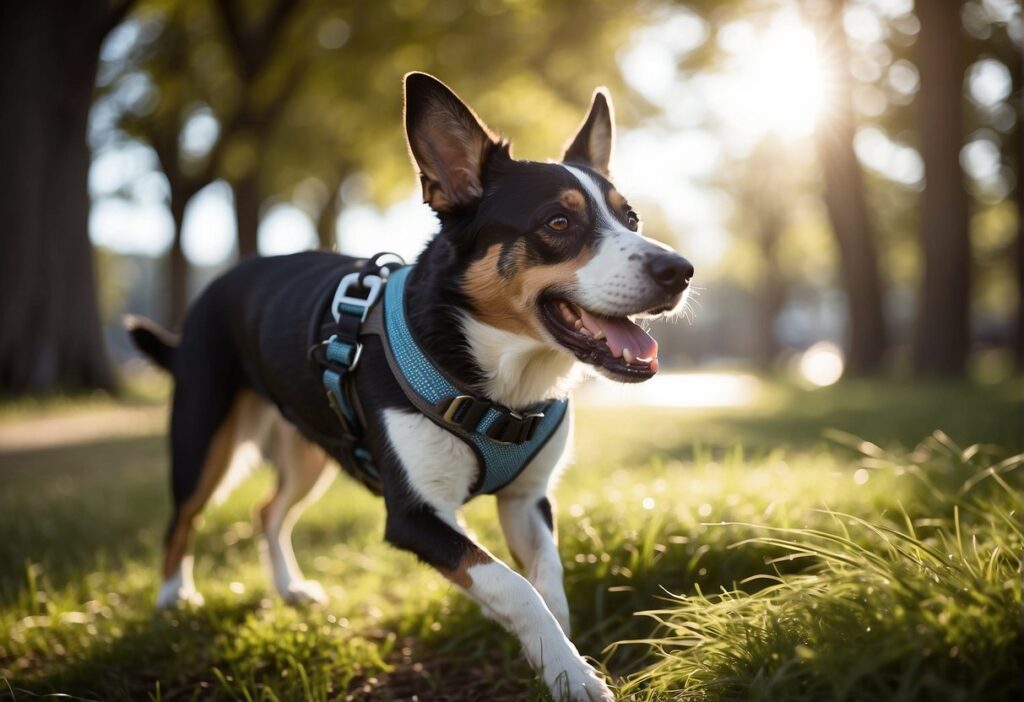
Recommendations for Harness Usage
Proper harness usage is vital for your dog’s comfort and safety. Understanding when to equip your dog with a harness and for how long will promote their well-being.
Duration of Wear
Harnesses aren’t designed for continuous wear. While leaving a harness on for a walk or training is fine, it should be removed to prevent skin irritation or fur matting.
Puppies, especially, can be susceptible to discomfort if a harness is left on for too long. It’s necessary to monitor for any signs of distress or chafing.
The activity level of your dog should dictate the duration of harness use. During high activity, a harness provides control and distributes pressure safely across your dog’s chest. However, when the activity ceases, such as during sleeping, the harness should be removed to avoid unnecessary strain or risk of injury.
Supervised vs. Unsupervised Time
When you’re present, you can observe your dog’s behavior and ensure their harness isn’t causing problems. Supervised time is therefore the appropriate time to have a harness on your dog. Regular checks during use can prevent harm, particularly if your dog is still adjusting to wearing a harness.
Conversely, leaving a dog with a harness unsupervised can lead to accidents or entanglement, posing a risk to their safety. Unsupervised periods, especially when you’re not home or when your dog is in their crate, demand removal of the harness. It’s simply the safest practice to prevent avoidable injuries.
| Activity | Harness Use | Supervision | Notes |
|---|---|---|---|
| Walking/Training | Yes | Required | Avoid the risk of entanglement or choking. |
| Resting/Sleeping | No | Not required | Remove the harness to allow the skin to breathe. |
| Alone Time | No | Not required | Remove for safety when unsupervised. |
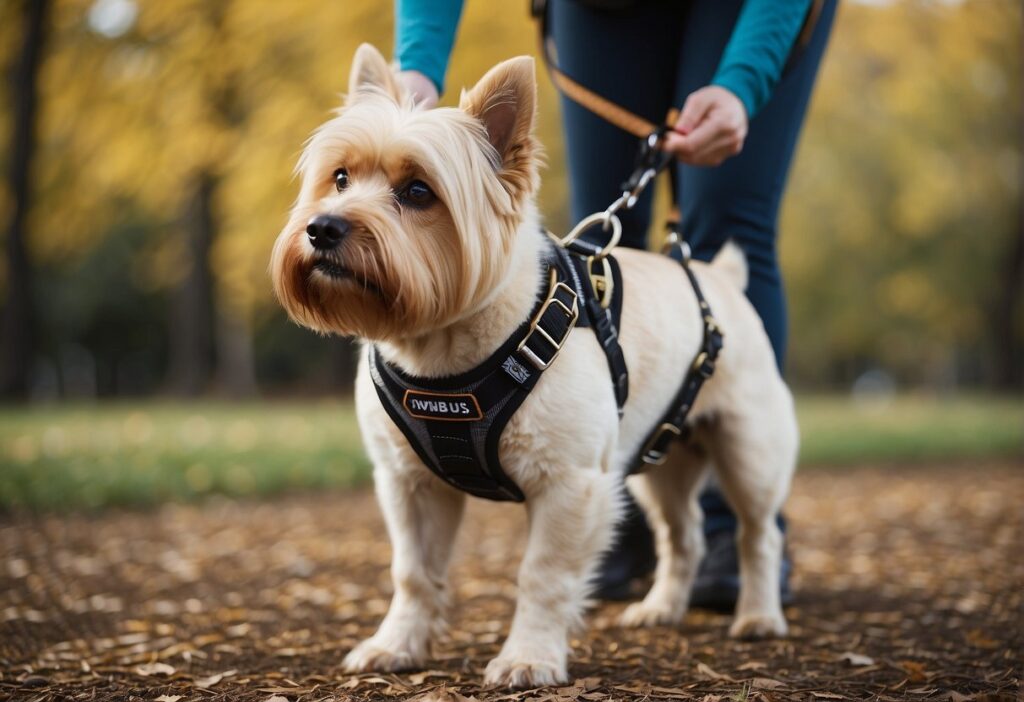
Choosing the Right Harness and Maintenance
Selecting the correct harness and maintaining it properly ensures the safety and comfort of your dog. It can also prolong the life of the harness, saving you money in the long run.
Selecting an Appropriate Harness
When you purchase a harness, ensure it suits your dog’s size, breed, and activity level. A snug fit is crucial; a harness that’s too tight can cause discomfort, while one that’s too loose can result in your dog escaping or the harness wearing out quickly.
Consulting a veterinarian or a pet expert can offer guidance tailored to your dog’s specific needs.
Durability matters, as daily wear and tear can take a toll on a harness. Look for strong materials like nylon or leather, and check the stitching and metal components for strength. Reflective materials are useful for nighttime safety.
Caring for Your Dog’s Harness
Regular cleaning and inspection can greatly extend the life of a dog’s harness.
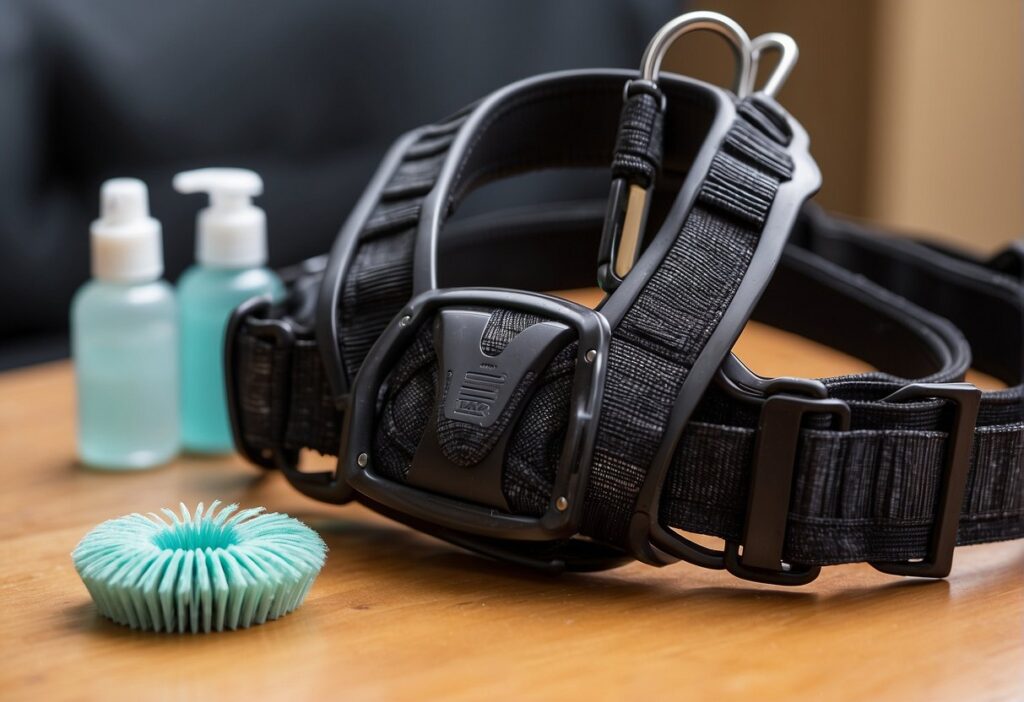
Follow the manufacturer’s instructions for the appropriate cleaning method, as materials can vary. Often, a mild soap and warm water will suffice, followed by air drying to prevent damage.
Inspect your dog’s harness regularly for signs of wear such as fraying straps or loose buckles.
Repair or replace it when necessary to avoid safety issues.
A well-cared-for harness contributes to your dog’s well-being.
Frequently Asked Questions
In this section, we address key queries you may have about the continual use of a dog harness and its impact on your pet’s well-being.
What are the potential drawbacks of keeping a harness on a dog for extended periods?
Having a harness on a dog constantly can lead to skin irritations and matting of the fur.
Extended pressure from harnesses could cause discomfort or might even lead to chafing, especially if the harness doesn’t fit properly or if the dog is very active.
Is it safe for a dog to sleep while wearing a harness?
While a dog can sleep with a harness on, it’s not ideal for extended periods due to potential risks.
A harness can catch on objects, leading to injury. It’s generally advised to let your dog sleep without a harness to prevent accidental entanglement or discomfort.
How does continuous harness wearing affect a dog’s skin and coat health?
Constant contact with a harness can damage a dog’s coat and skin.
Friction from the harness can result in hair loss and hot spots. It’s advisable to routinely check under the harness for any signs of skin irritation or abnormal hair loss.
Can a dog wear both a collar and a harness at the same time safely?
Yes, a dog can safely wear both as long as each fits well.
It’s essential to ensure neither the harness nor the collar is too tight. Especially during walks, both can be used together for added security and control.
Should a dog’s harness be removed at certain times to prevent discomfort?
It’s good practice to remove a dog’s harness during times of rest or when it is unsupervised.
This helps prevent potential hazards and ensures your pet’s comfort. Periodically giving your dog a break can also prevent the issues mentioned earlier.
Are there any benefits to letting a dog wear a halter continuously?
Continual halter use isn’t generally recommended. However, it can be useful in training phases to establish certain behaviors.
When a dog is new to a halter, it can be kept on for some time for acclimation, under supervision.


